.png)
Destinations on Your Alaska Cruise Adventure
- Russ Fulgham

- Jun 19
- 6 min read

Alaska is one of the last great wilderness destinations on Earth, and a cruise is the best way to see it. You get direct access to remote glaciers, ancient port towns, and open water teeming with wildlife, all without unpacking more than once. But not every stop is equal, and knowing what to prioritize makes the difference between a good trip and an unforgettable one.
Here are the must-see destinations on an Alaska cruise, and what to do when you get there.
Glacier Bay National Park
If your itinerary includes only one scenic cruising day, make sure it's Glacier Bay. This UNESCO World Heritage site sits at the northern end of the Inside Passage and puts you face-to-face with some of the most dramatic ice on the planet.
Ships typically spend a full day here, sailing deep into the bay while National Park Rangers board the vessel to narrate what you're seeing. The star attraction is Margerie Glacier, a tidewater glacier standing roughly 250 feet tall and a mile wide at its face. Chunks of ice break off and crash into the water below in a process called calving. When a big piece falls, the sound echoes across the bay like a crack of thunder. Locals call it "White Thunder."
Your captain will typically rotate the ship 360 degrees so every passenger gets a clear view. Keep binoculars handy: harbor seals rest on floating ice floes, humpback whales surface nearby, and brown bears are sometimes spotted along the shoreline.
Juneau: Glaciers, Whales, and Mountaintop Views
Juneau is Alaska's state capital, and it's unlike any capital you've visited. There are no roads connecting it to the rest of the country. The only way in is by sea or air, which gives the city a remote, frontier feel despite its museums, restaurants, and government buildings.
The Mendenhall Glacier sits just 12 miles from the cruise terminal. You can hike to Nugget Falls, which tumbles directly in front of the glacier's face, or visit the visitor center for a close-up look at the blue ice walls. Book your shuttle or excursion in advance as spots fill up fast. This is a beautiful place and the visitor center is really informative.
Whale watching out of Juneau is among the best in Southeast Alaska. Tour operators commonly offer a 100% sighting guarantee for humpbacks between May and September, with orcas appearing regularly too. If you only do one wildlife excursion on your entire cruise, consider doing it here.
Back in town, the Mount Roberts Tramway departs right from the cruise dock and climbs 1,800 feet in minutes. At the top, you get alpine trails, a bald eagle sanctuary, and panoramic views over the Gastineau Channel.
Skagway: A Gold Rush Town Frozen in Time
Skagway sits at the northern tip of the Inside Passage and looks almost exactly as it did during the Klondike Gold Rush of 1898. Wooden storefronts line the main street, and the entire historic district is preserved as a National Historical Park. It's one of the most walkable ports on any Alaska itinerary.
The centerpiece excursion is the White Pass and Yukon Route Railroad, a narrow-gauge train that climbs nearly 3,000 feet through rugged mountain passes, past waterfalls, gorges, and precarious cliff edges. Gold Rush prospectors once struggled up this same route on foot in brutal winter conditions. Riding it by train, with wide windows and a narrated history, is a completely different experience, and worth every minute.
Back in town, wander through the Klondike Gold Rush National Historical Park, pop into the Red Onion Saloon (a former brothel turned bar and museum), and browse the shops along Broadway. Skagway rewards slow walkers.
Ketchikan: Totem Poles and Misty Fjords

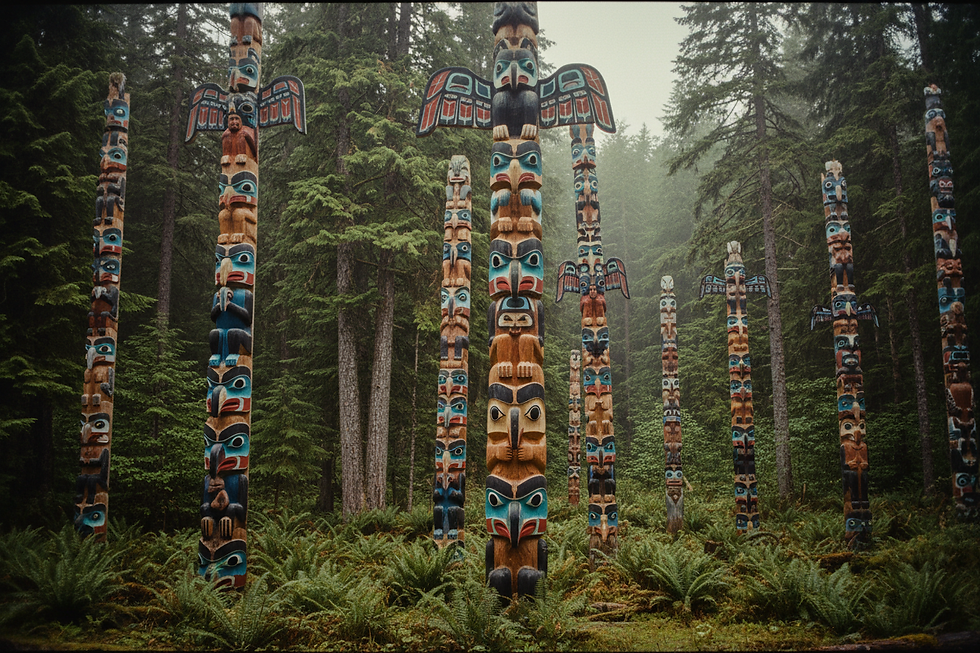
Ketchikan calls itself the Salmon Capital of the World, and it backs that up. The waterways around town fill with salmon every summer, and you can watch them swim upstream from the boardwalks along Creek Street, a historic stretch of shops and galleries built on stilts above Ketchikan Creek.
The real cultural draw is the totem poles. Ketchikan has the largest collection in the world, spread across three sites: the Totem Heritage Center downtown, Saxman Native Village (about 2 miles south of town), and Totem Bight State Park (about 10 miles north). Each tells a different story from Tlingit, Haida, and Tsimshian history. Allow at least two hours if you want to see more than one site.
For something more dramatic, book a floatplane trip to Misty Fjords National Monument. The glacier-carved cliffs rise up to 3,000 feet straight out of the water, and the low cloud cover that gives the monument its name creates an almost surreal, cinematic atmosphere.
Hubbard Glacier: The Giant That's Growing

While most glaciers in Alaska are retreating, Hubbard Glacier is advancing. It's the largest tidewater glacier in North America, stretching 76 miles long and 6 miles wide at its face. Ships approach as close as conditions safely allow, which can vary by day depending on how much ice is in the water.
There's no port stop here. This is pure scenic cruising, and it delivers some of the most raw, awe-inspiring scenery on any Alaska itinerary. When conditions are right and a large section calves, the wave it generates is visible from the ship's deck. It's a reminder that you're watching something ancient and immense.
Sitka: Culture, Raptors, and Sea Kayaking
Sitka is one of the most historically layered ports in Alaska. It was the capital of Russian America before the United States purchased Alaska in 1867, and that history is still visible in the streets. The Russian Bishop's House is one of the oldest intact Russian buildings in North America, and St. Michael's Cathedral sits at the center of town with its distinctive onion dome.
The Alaska Raptor Center rehabilitates injured birds of prey, including bald eagles. Visiting here puts you just a few feet away from eagles that would otherwise be impossible to see up close. It's one of the more quietly powerful experiences available on an Alaska cruise.
Sitka Sound is also exceptional for sea kayaking. Paddling among sea otters, sea lions, and forested islands on calm water is a very different pace from the glacier-viewing days, and a welcome one.
Tracy Arm Fjord: Deep Blue Ice and Sheer Cliffs
Tracy Arm is a narrow fjord about 50 miles south of Juneau, and it's one of the most photogenic corridors in all of Southeast Alaska. Sheer granite walls rise on both sides as your ship pushes through water filled with floating ice chunks. At the head of the fjord, the twin Sawyer Glaciers glow in an intense shade of blue that almost looks digital.
Some ships combine Tracy Arm with Juneau on the same day. If yours does, take your time on deck as you sail into the fjord. Waterfalls pour down the cliffs, mountain goats cling to near-vertical rock faces, and the scale of everything around you is genuinely hard to process.
Icy Strait Point: Bears, Ziplines, and Open Nature
Icy Strait Point is a private port owned by the Huna Tlingit people of Hoonah, and it feels nothing like a typical cruise stop. There's no chain shopping or tourist corridor. Instead, you get a restored salmon cannery turned cultural center, open wilderness, and Chichagof Island, which has one of the highest concentrations of brown bears in the world.
The port is also home to the world's largest ZipRider, a zip line that drops more than 1,300 feet from a mountaintop with views over the bay. For a quieter option, whale watching tours in Icy Strait consistently produce humpback sightings, often in large groups.
Practical Tips Before You Go
Pack for All Conditions
Temperatures near glaciers can drop to 35°F while port towns reach 70°F on sunny days. Bring a waterproof shell, a fleece mid-layer, and moisture-wicking base layers. Layering is not optional.
Book Excursions Early
Popular tours, especially the White Pass Railroad, Mendenhall Glacier shuttles, and floatplane trips to Misty Fjords, sell out weeks before departure. Don't leave it until you're on board.
Bring Good Binoculars
A quality pair of binoculars is the single most cited piece of gear by repeat Alaska cruisers. Wildlife sightings happen fast and at distance. You'll use them every single day.
When to Go
Alaska cruise season runs from May through September. July is the warmest month with the most active wildlife and the highest fares. May and September offer 20 to 40 percent lower prices and fewer crowds, though you'll trade some warmth for the savings. June and August sit in the middle on both counts and are widely considered the sweet spot for first-time visitors.
Whatever month you choose, Alaska will not disappoint. The scale of the wilderness, the weight of the history, and the sheer amount of wildlife you can see in a single week make an Alaska cruise one of the most rewarding journeys available to travelers today. Pick your ports, plan your excursions, and keep your eyes on the water. Something remarkable is always nearby.


Comments